
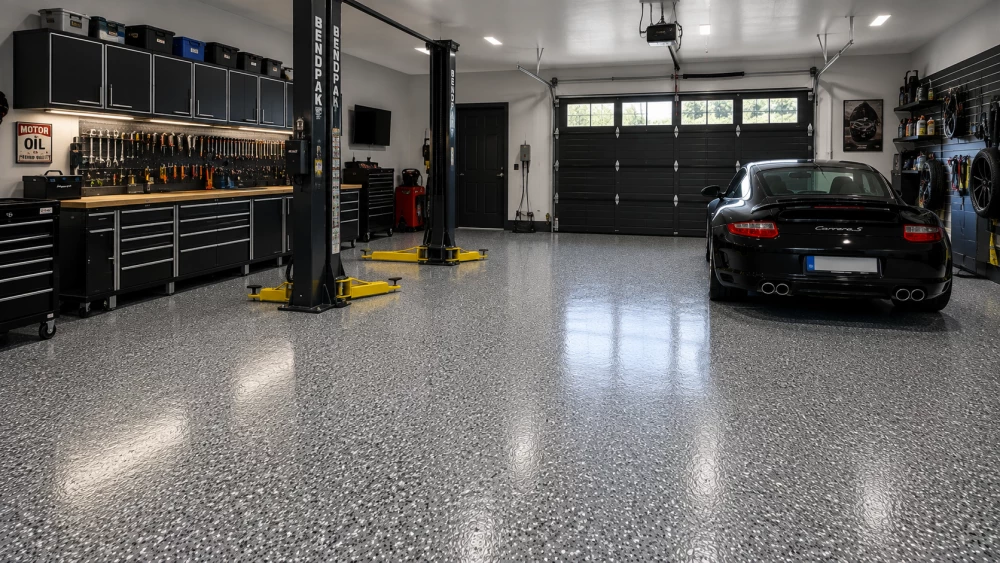
Garage Flooring in Heston
Get in TouchCommercial garage floors are exposed to vehicle movements, oils, tools, equipment and repeated mechanical work. These conditions can quickly wear an untreated or deteriorating concrete surface.
We install epoxy resin garage flooring in Heston for vehicle repair centres, MOT facilities, servicing garages and other commercial automotive premises.
Commercial Garage Resin Flooring
Epoxy resin provides a hard-wearing finished surface over suitably prepared concrete.
Garage flooring systems can be used across:
Vehicle repair garages
MOT centres
Service garages
Dealership service areas
Fleet maintenance facilities
Vehicle inspection bays
Tyre and exhaust centres
Commercial vehicle garages
The flooring system should be selected according to the traffic, contamination and working conditions within the garage.
Garage Service Bay Flooring
Service bays experience concentrated activity throughout the working day.
Vehicles repeatedly enter and leave the same areas, while technicians work with tools, jacks and other workshop equipment around them.
A garage floor therefore needs to account for both vehicle traffic and the mechanical wear created by servicing operations.
Higher-build epoxy systems can be specified where a basic coating would not provide sufficient durability.
MOT Centre Flooring Heston
MOT centres require clearly organised vehicle inspection areas.
Resin flooring can provide a continuous finished surface around inspection bays while different colours and markings can be used to identify operational areas.
Floor markings can define:
Vehicle positions
Inspection areas
Pedestrian routes
Equipment zones
Keep-clear areas
Entrances and exits
The exact layout can be adapted to the way vehicles and employees move through the facility.
Oil and Grease Contamination
Oil and grease are common contaminants in vehicle repair environments and can significantly change the slip characteristics of a floor.
Garages should have procedures for preventing and quickly dealing with spillages, while the flooring itself should be suitable for the conditions in which it will be used.
Where regular contamination is expected, a resin system with an appropriate textured finish can be considered.
Slip-Resistant Garage Flooring
A smooth floor can become slippery when contaminated by water, oil or other automotive fluids.
Slip-resistant resin finishes incorporate additional surface texture to provide greater grip under the expected conditions.
Areas where this may be particularly relevant include:
Vehicle entrances
Service bays
Areas around machinery
Wet working areas
Garage doorways
Frequently contaminated routes
Surface texture should be specified alongside the cleaning regime because more heavily textured flooring can require more intensive cleaning.
Epoxy Flooring Around Vehicle Lifts
Vehicle lifts create specific installation considerations.
The resin flooring may need to terminate around lift bases, fixings and other equipment while maintaining a practical finished surface.
Existing garages can also contain recessed equipment, inspection pits, service connections and other features that need to be accounted for during preparation.
The resin finish does not provide structural support for lifting equipment. Loads from vehicle lifts and machinery must be supported by an appropriate substrate.
Garage Floor Chemical Resistance
Vehicle maintenance can expose flooring to substances such as oils, lubricants, coolants, cleaning products and other automotive fluids.
Epoxy flooring systems provide different levels of chemical resistance.
The appropriate specification depends on what substances are present and factors such as concentration, contact time and frequency of exposure.
Where unusual or particularly aggressive chemicals are used, their compatibility with the proposed flooring system should be checked before installation.
Vehicle Traffic and Tyre Wear
Garage floors experience a different traffic pattern from general commercial buildings.
Vehicles repeatedly brake, steer and turn within relatively confined areas. Wear can therefore become concentrated around entrances, bays and frequently used routes.
The expected vehicle type and frequency of movement should form part of the flooring specification.
Commercial vehicle garages may require a different system from premises primarily servicing cars and light vans.
Garage Floor Repairs Heston
Existing garage concrete can develop cracks, damaged joints, worn surfaces and areas where previous coatings have failed.
Applying epoxy directly over these defects can affect the finished floor.
Before installation, the existing surface can be assessed for:
Cracks
Joint damage
Oil contamination
Uneven areas
Failed coatings
Local concrete damage
Moisture issues
Repairs can then be completed where required before the main resin system is applied.
Removing Old Garage Floor Coatings
Existing paint and failed resin coatings normally need to be removed where they would interfere with the new flooring system.
Mechanical preparation can expose a suitable concrete surface and remove weak or poorly bonded material.
Depending on the existing floor, preparation may involve grinding or shot blasting followed by local repairs.
Oil-contaminated concrete may require additional treatment before a new resin system can be installed.
Colour and Garage Floor Markings
Epoxy flooring does not have to be installed as one uniform colour.
Contrasting areas can distinguish work bays, pedestrian routes and operational zones.
Line marking can also make routes and designated working areas easier to identify within larger garages.
This can be particularly useful where employees and moving vehicles regularly share the same building.
Refurbishing a Working Garage
Closing an entire vehicle repair facility for flooring work is not always practical.
Where the layout and selected flooring system allow, refurbishment can be planned around separate bays or sections.
The programme should account for surface preparation, repairs, resin application and curing before vehicles or equipment return to the completed area.
Garage Flooring Contractors Heston
We install commercial epoxy resin flooring for garages and vehicle maintenance facilities throughout Heston.
Projects can include existing coating removal, concrete preparation, floor repairs, epoxy resin installation, slip-resistant finishes and floor markings.
Send us photographs of the existing garage floor, the approximate floor area and details of the vehicles and activities within the building. This helps establish the preparation and resin system required for the project.
We cover Heston (Greater London)